Why Your Best Co-Founder
Is Probably a Stranger

When Amy and I published the Billion-Dollar Founder Study, one finding generated more discussion than any other.
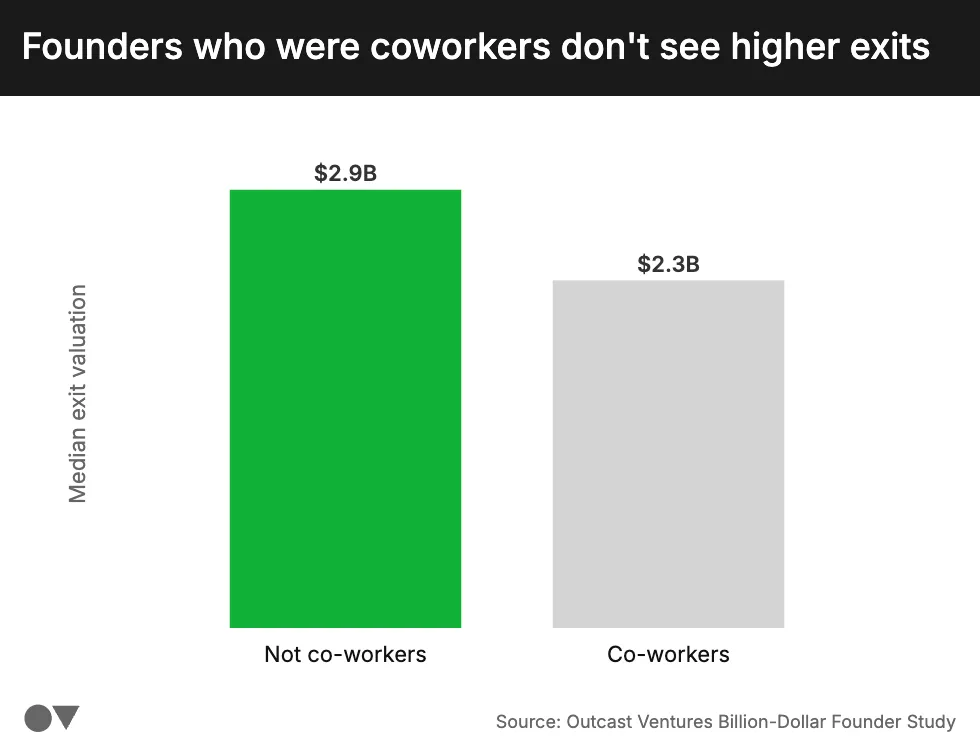
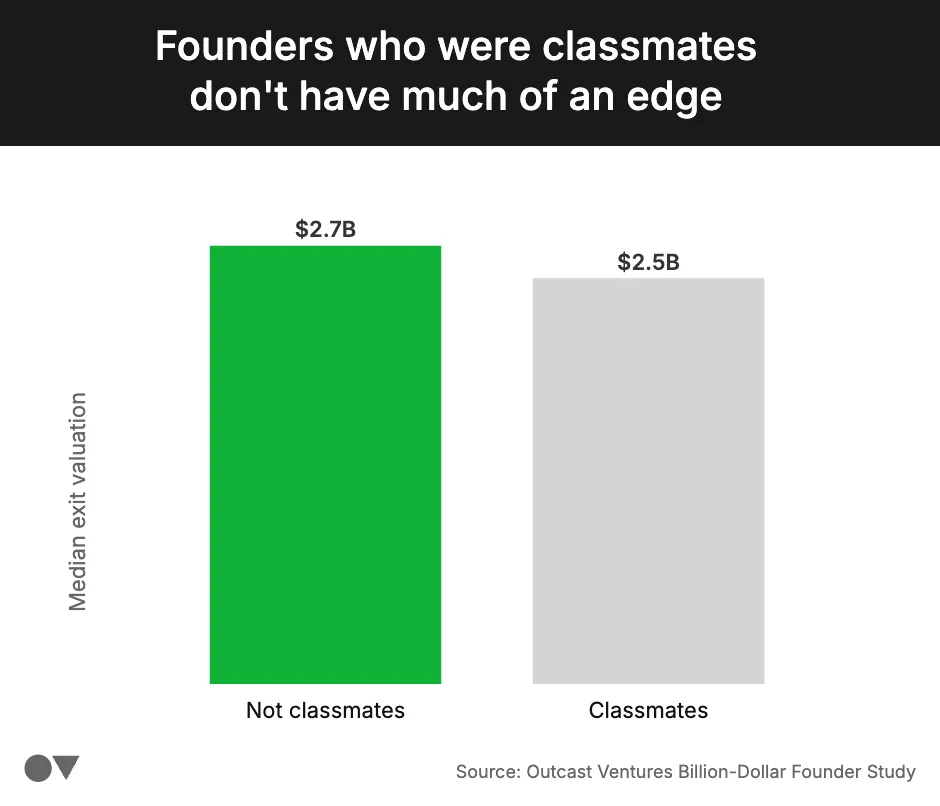
Founders who had worked together before produced companies with 21% lower valuation than founders who hadn’t. The same was true for founders who went to school together. It challenged one of the oldest assumptions in startups: that shared history produces stronger founding teams.
The question everyone asked next was…
…Why?
At first glance, the conclusion seems absurd. Surely strangers don’t make better co-founders than friends.
I think they do.
But not for the reason most people assume.
Convenience narrows the search
Most founders don’t choose a co-founder. They inherit one. They inherit whoever happens to already be in their life: former coworkers, classmates, or close friends. The search begins with familiarity instead of the needs of the company.
Imagine hiring your first engineer. You probably wouldn’t only interview your college roommates or the people who happened to sit near you at work. You’d cast a much wider net because you’re trying to find the best person for the role.
Choosing a co-founder deserves far more rigor than hiring your first employee.
The question shouldn’t be, “Who do I already know that could start a company with me?” It should be, “Who is the best person to build this company?” Those are completely different searches, and the second almost always leads you beyond your existing network.
You’re not looking for another you
Searching beyond your network also changes who you meet.
Friends and former coworkers often share similar experiences, similar ways of thinking, and many of the same blind spots. That’s often why they became friends in the first place. They understand each other because they’ve traveled similar paths.
Great founding teams rarely look alike.
The strongest teams I’ve seen share values, ambition, and integrity, but their strengths rarely overlap. One founder gravitates toward product while the other loves recruiting or sales. One has deep technical expertise while the other understands customers better than anyone else. Instead of reinforcing the same capabilities, they fill each other’s gaps.
By being different, they also expand the company from day one by bringing different networks, experiences, judgment, customers, investors, and future hires.
Instead of reinforcing one network, you’re combining two.
That’s why I think the pattern shows up in the data from our Billion Dollar Founder study. The best co-founder isn’t the most convenient one. It’s the most complementary one.
Familiarity can make you lazy
Trust is valuable, but it also creates assumptions.
Friends often believe they already know each other well enough to skip the conversations that matter most because they assume the answers are obvious.
How much risk are we both willing to take?
What kind of company do we actually want to build?
Who has the final decision when we disagree?
How should equity really be divided?
Founders who meet through a deliberate search are forced to answer those questions before they build. Nothing can be assumed. Expectations have to be discussed explicitly before either person commits the next decade of their life to the partnership.
Friends, on the other hand, often postpone those conversations because the relationship already feels secure. But familiarity isn’t alignment.
When those conversations don’t happen early, things like product disagreements have a way of becoming personal disagreements because the relationship existed long before the company did.
Ironically, having less history often produces a stronger foundation because everything important gets discussed before it becomes a problem.
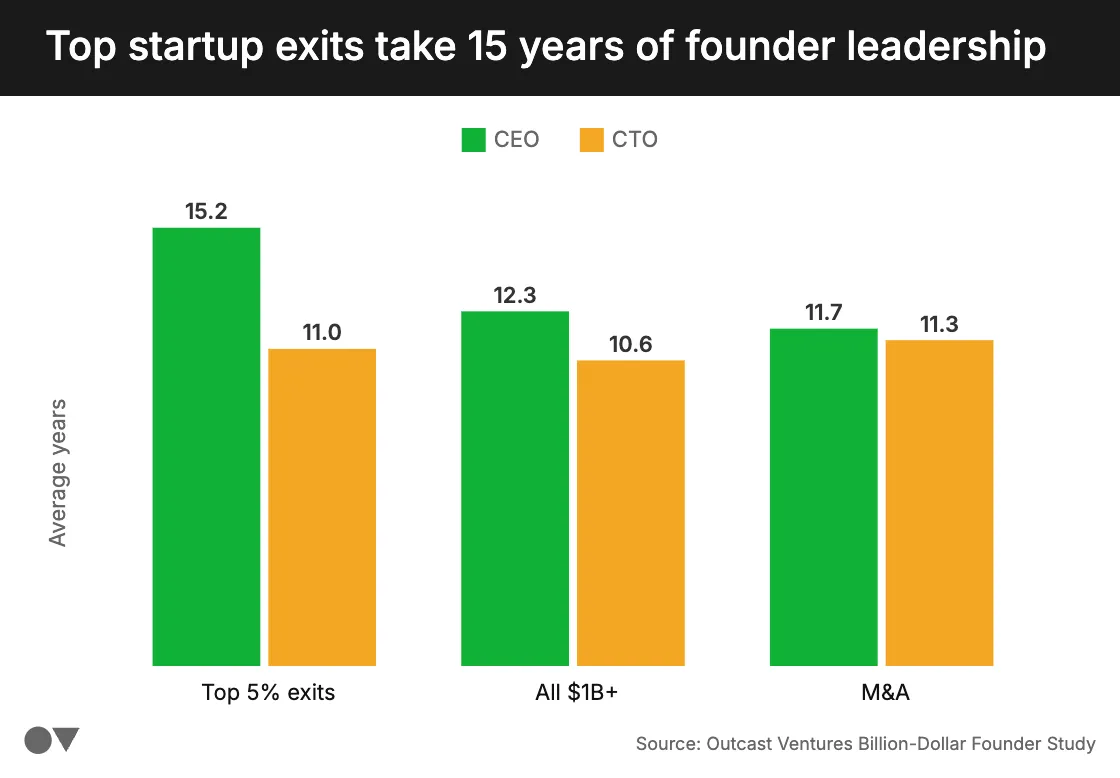
This matters because you’re not choosing someone for six months. Across The Billion Dollar Founder Study, the largest companies were often led by founders who worked together for 15 years or more.
If you’re building together for more than a decade, it’s worth having the uncomfortable conversations early.
Success actually shrinks your founder network
You’d think finding a great co-founder gets easier as your career progresses.
The opposite often happens, and we call this the success paradox.
Early in your career, you’re surrounded by peers. Everyone is learning, experimenting, and looking for opportunities. But as you become more successful, your network changes. Instead of peers, you’re increasingly surrounded by employees, investors, customers, advisors, and people who work for you rather than alongside you.
That’s the success paradox.
The more accomplished you become, the fewer people you regularly meet who are both capable of building a venture-scale company and available to start one.
The irony is that the founders who have the highest standards for a co-founder often have the smallest pool to choose from.
That’s why deliberate search becomes even more important later in your career. The right co-founder is less likely to appear through your day-to-day network because your network has evolved. Finding them often requires stepping outside the circles you’ve spent years building.
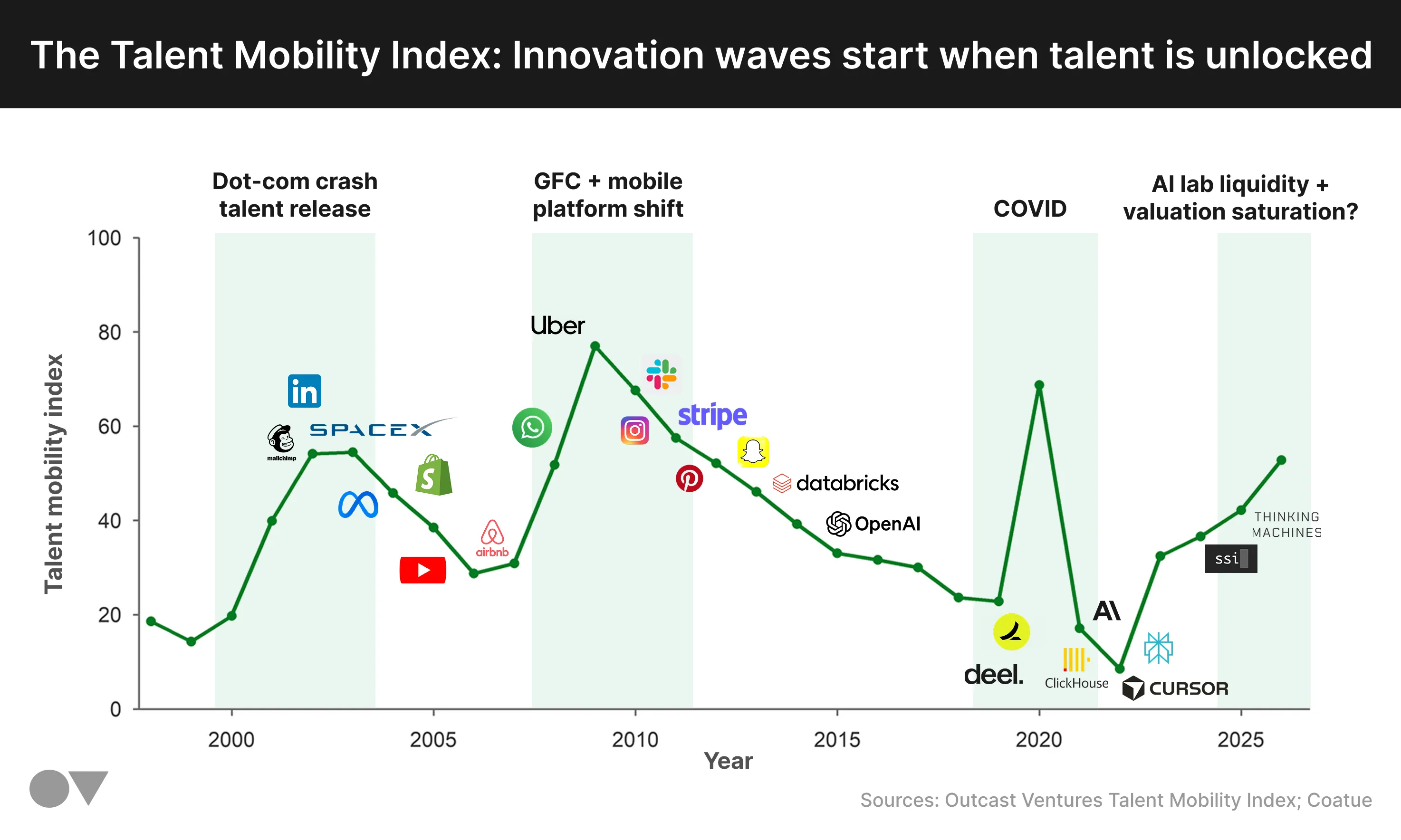
The success paradox becomes even more pronounced during periods when exceptional talent is locked inside large companies. One of the reasons we’re so excited about today’s environment is that more experienced builders are becoming available to start companies again.
So yes, I think strangers make better co-founders.
Because they are what you find when you search beyond convenience.